

Cancelling Cannabis
Summary
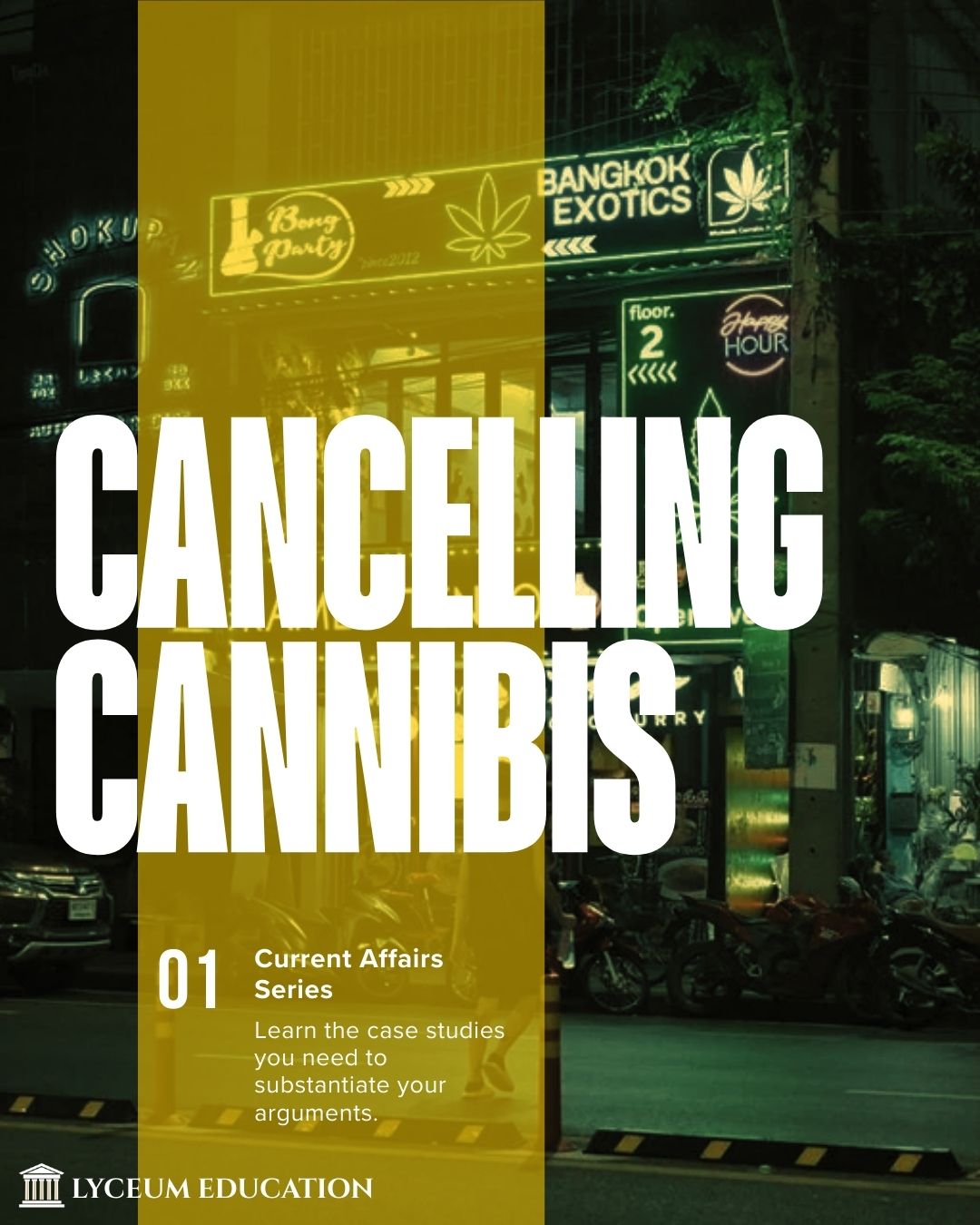
Thailand’s rapid cannabis liberalisation has backfired. A policy that was meant to revive the post-pandemic economy has instead triggered social and political backlash that could see the drug recriminalised after February’s election. After becoming Asia’s first country to decriminalise cannabis in 2022, Thailand saw an explosion of poorly regulated recreational use, with dispensaries proliferating nationwide, rising youth consumption, spikes in hospitalisations and cannabis-induced psychosis. Data show recreational use surged nearly tenfold between 2020 and 2022, while medical use grew only marginally, undermining claims of economic and healthcare benefits; most firms remain unprofitable despite billion-dollar projections. Public opinion has since swung decisively, with over two-thirds of Thais favouring reclassification as a narcotic.
Application
The Thai cannabis experience highlights how widely held assumptions about drugs can prove flawed. Many initially believed that decriminalisation would remain largely medical, economically beneficial, and socially contained, underestimating how quickly misuse could spread in the absence of firm safeguards. This misjudgement reflects the human tendency to act on incomplete understanding, where ignorance is mistaken for tolerance or progress. When such blind spots shape policy, the consequences extend beyond individual harm. In these circumstances, unrestrained freedom is not a virtue but a liability: without clear boundaries, the costs are diffused across society. Regulation, therefore, is a recognition that informed restraint is often the most compassionate course of action.