

Floating Power Station
Summary
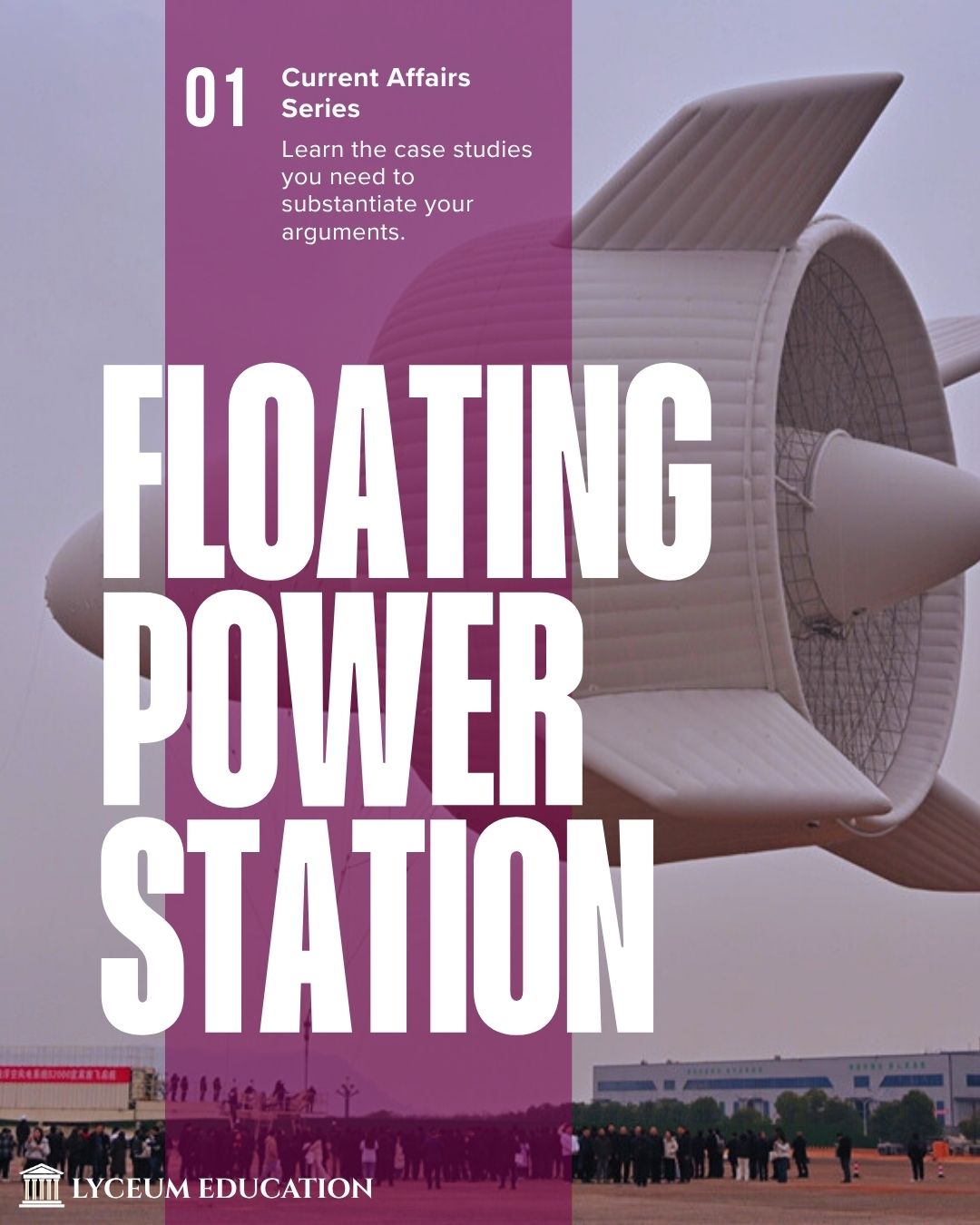
China has successfully tested the world’s first megawatt-class high-altitude wind power system, marking a potential breakthrough in urban renewable energy. The S2000 Stratosphere Airborne Wind Energy System (SAWES) flew at 2,000 metres over Sichuan Province, generating electricity and feeding it directly into the power grid for the first time. Operating like an airborne power station, the aircraft-like platform combines an airship with wind turbines to capture stronger, more stable winds high above the ground, transmitting power via overhead cables. During its 30-minute test flight, it produced 385 kilowatt-hours of electricity, while demonstrating advances in aerodynamic design and efficient lightweight power transmission. Beyond electricity generation, the system could also carry communication and monitoring equipment, though it remains in the testing phase for now.
Application
This development demonstrates how advances in technology are expanding what is possible by turning natural constraints into opportunities. Traditionally, wind energy has been limited to open landscapes or offshore areas where wind conditions are strong and consistent. By contrast, high-altitude airborne wind systems use engineering, materials science, and power-transmission technologies to access stronger and more stable winds far above the ground, dramatically improving efficiency. In doing so, technology enables humanity to overcome geographical limitations, allowing dense urban areas and land-scarce regions to tap into renewable energy sources once thought inaccessible.