

Singing Inmates
Summary
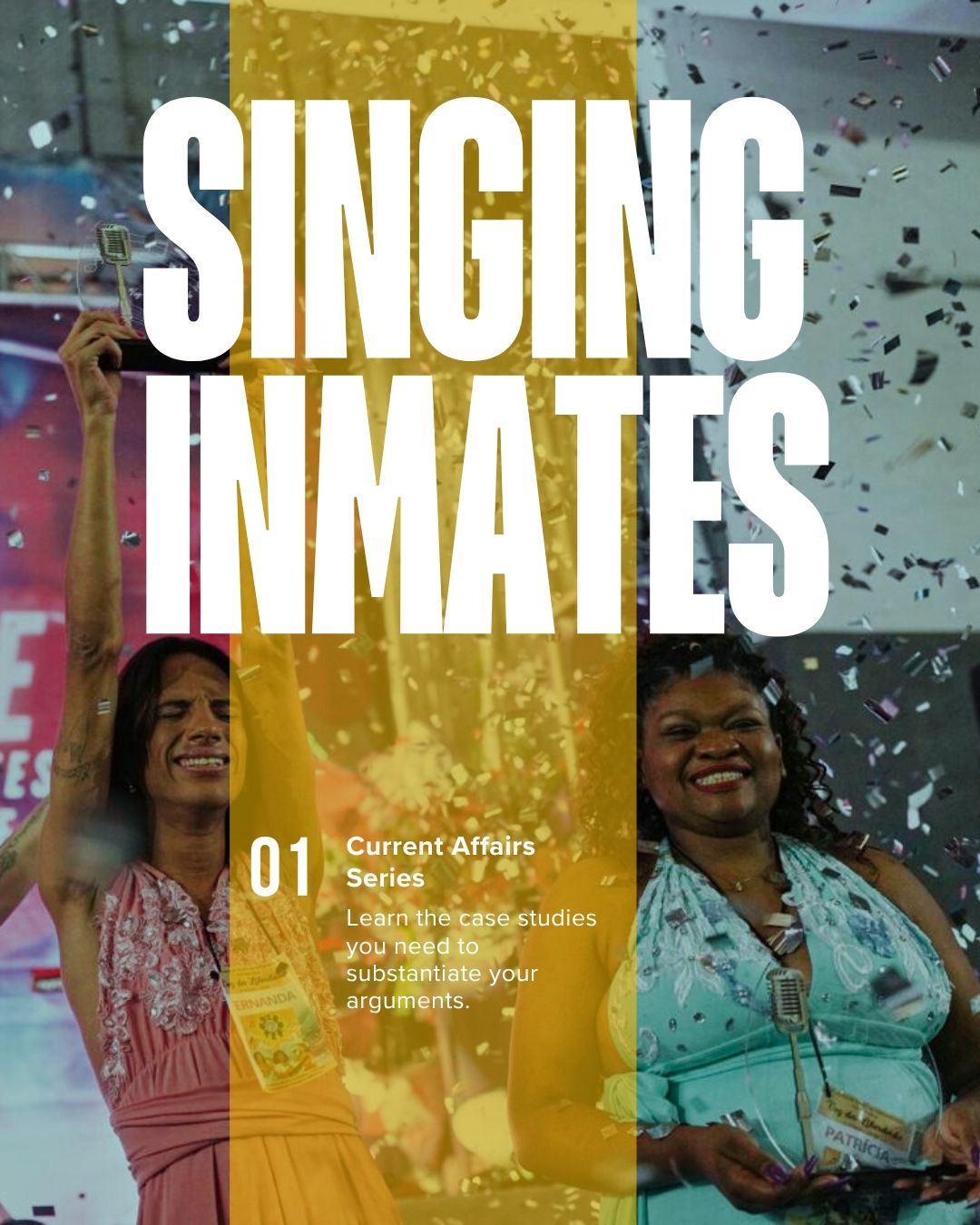
In a Rio de Janeiro women’s prison, incarcerated women took part in a singing competition known as Voice of Liberty, an event designed to highlight talent, build confidence, and support rehabilitation ahead of their release. Contestants dressed up, performed gospel and Brazilian popular music before fellow detainees, officials, and guest judges, and were evaluated on voice, performance, and presentation. Beyond the competition itself, months of rehearsals and preparation added meaning and variety to prison life, while participants described music as empowering, liberating, and emotionally sustaining. Prison authorities emphasised that such cultural initiatives help rehabilitate inmates, ease tensions within the facility, and foster hope and self-worth in an otherwise harsh environment.
Application
Art is emancipating and cathartic because its deepest value lies not in applause or profit, but in the process of creation itself. When individuals engage in making art, they momentarily transcend their circumstances, finding agency, expression, and emotional release. For prisoners living in restrictive and tense environments, the act of singing, rehearsing, or performing becomes a form of inner freedom, offering comfort and relief even when physical freedom is absent. Through the creative process, art restores dignity and humanity, allowing individuals to reconnect with themselves and experience healing, regardless of external recognition.