

Takeshima
Summary
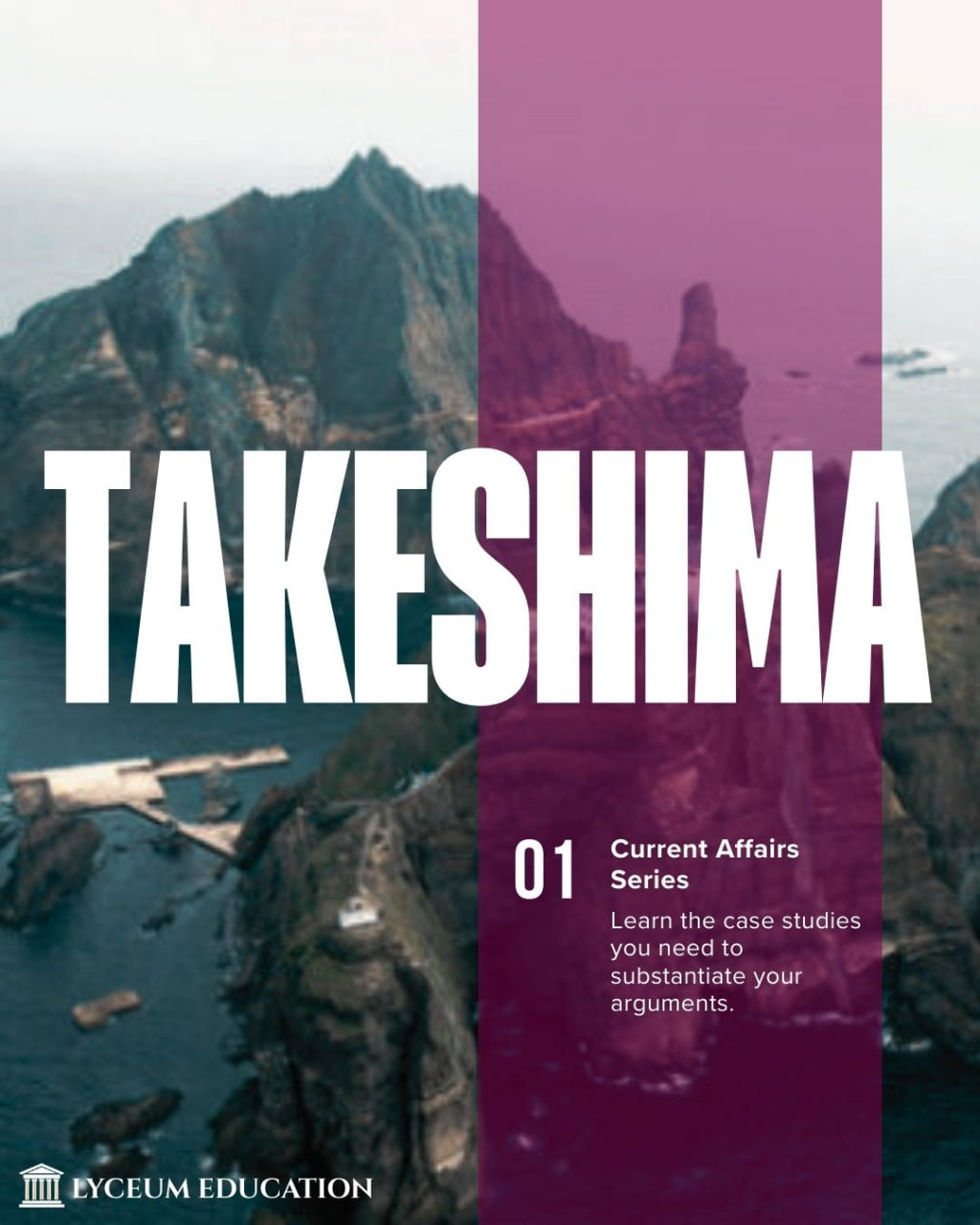
Takeshima Day is an annual event held on 22 February in Japan’s Shimane prefecture to assert Japan’s claim over a group of disputed islets in the Sea of Japan (East Sea). Japan calls the islands Takeshima, while South Korea calls them Dokdo and currently administers them. Each year, the prefectural government holds a ceremony attended by local officials and, sometimes, representatives from Japan’s central government. While Tokyo frames the event as a legitimate reaffirmation of territorial sovereignty, Seoul sees it as a provocative political signal. As a result, Takeshima Day frequently triggers diplomatic protests and highlights the broader historical and territorial tensions between the two countries.
Application
Tensions over disputed territories such as Dokdo/Takeshima can be explained through both realist and constructivist theories of international relations. From a realist perspective, associated with thinkers like Hans Morgenthau and Kenneth Waltz, states operate in an anarchic international system where survival, power and sovereignty are paramount. Even small islands carry strategic value because they extend maritime boundaries, grant access to fishing grounds and natural resources. However, constructivist theory, associated with scholars like Alexander Wendt, suggests that such disputes are not merely about material interests but also about identity and historical memory. In the case of Dokdo/Takeshima, the islands represent colonial trauma and injustice for South Korea, while for Japan they symbolise legal sovereignty and national dignity.