

North Korean Nukes
Summary
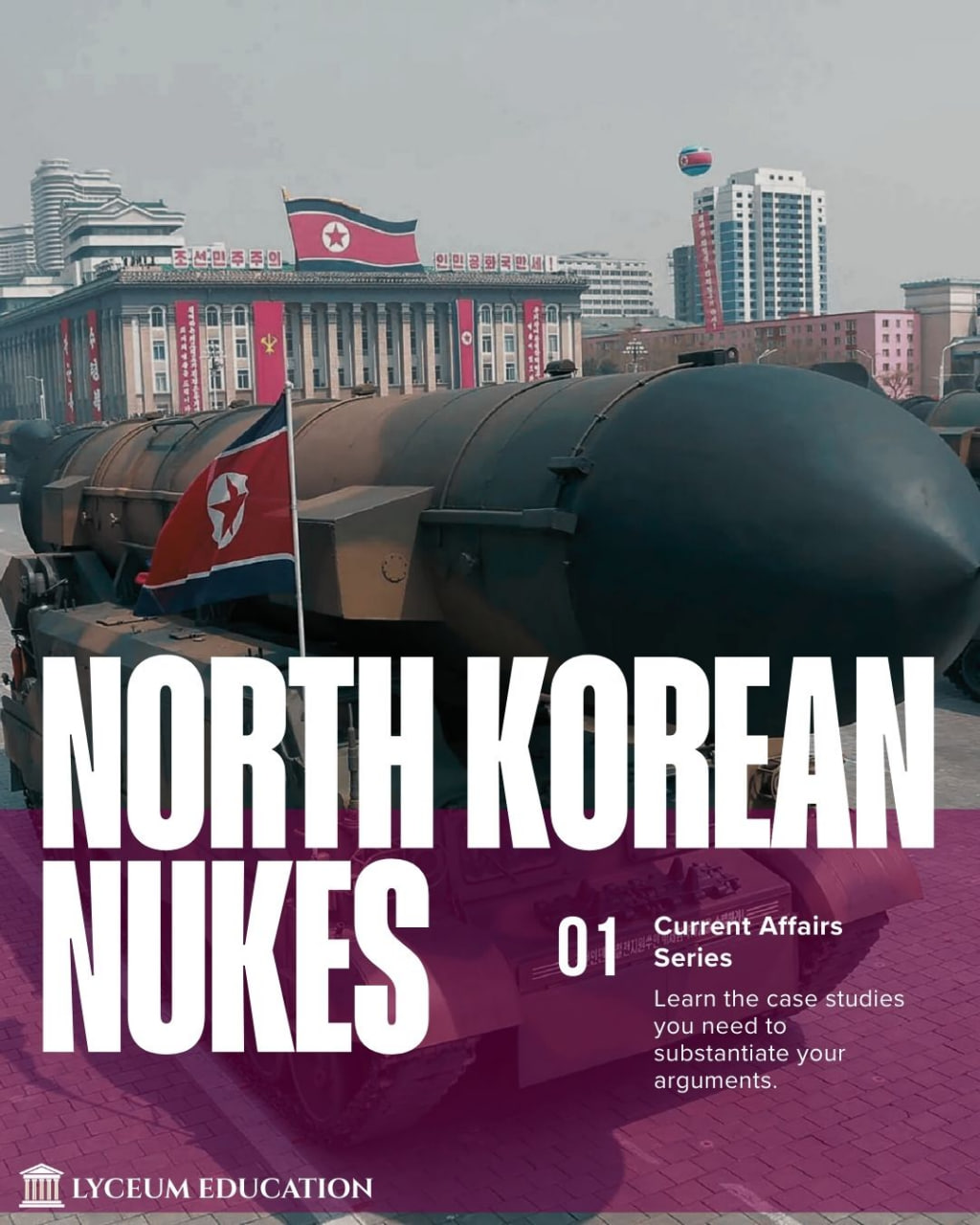
North Korean leader Kim Jong Un pledged to expand the country’s nuclear arsenal and strengthen its military capabilities as the ruling Workers’ Party Congress concluded with a military parade in Pyongyang. He outlined plans to increase nuclear warheads, develop more advanced intercontinental ballistic missiles, and invest in AI-based and unmanned attack systems, while asserting North Korea’s elevated international status. Kim signalled that dialogue with the United States remains possible only if Washington abandons what Pyongyang calls its “hostile policy,” but ruled out talks with South Korea, labelling it a hostile enemy and warning of potential retaliatory actions. The remarks highlight North Korea’s continued focus on military power alongside a conditional openness to diplomatic engagement with the US.
Application
Nuclear weapons can produce either nuclear peace or nuclear war depending on how states manage deterrence and escalation. On one hand, their immense destructive power creates mutual fear, discouraging countries from attacking each other because any conflict could result in catastrophic retaliation; this logic underpins deterrence and has been used to explain why major nuclear powers have avoided direct war. On the other hand, the same weapons heighten the stakes of miscalculation, accidents, or aggressive posturing, where misunderstandings, technical failures, or escalating crises could trigger their use and spiral into devastating conflict. Thus, nuclear weapons simultaneously stabilise and destabilise international relations, preventing large-scale wars while making any potential confrontation far more catastrophic.