

Foreign Intervention
Summary
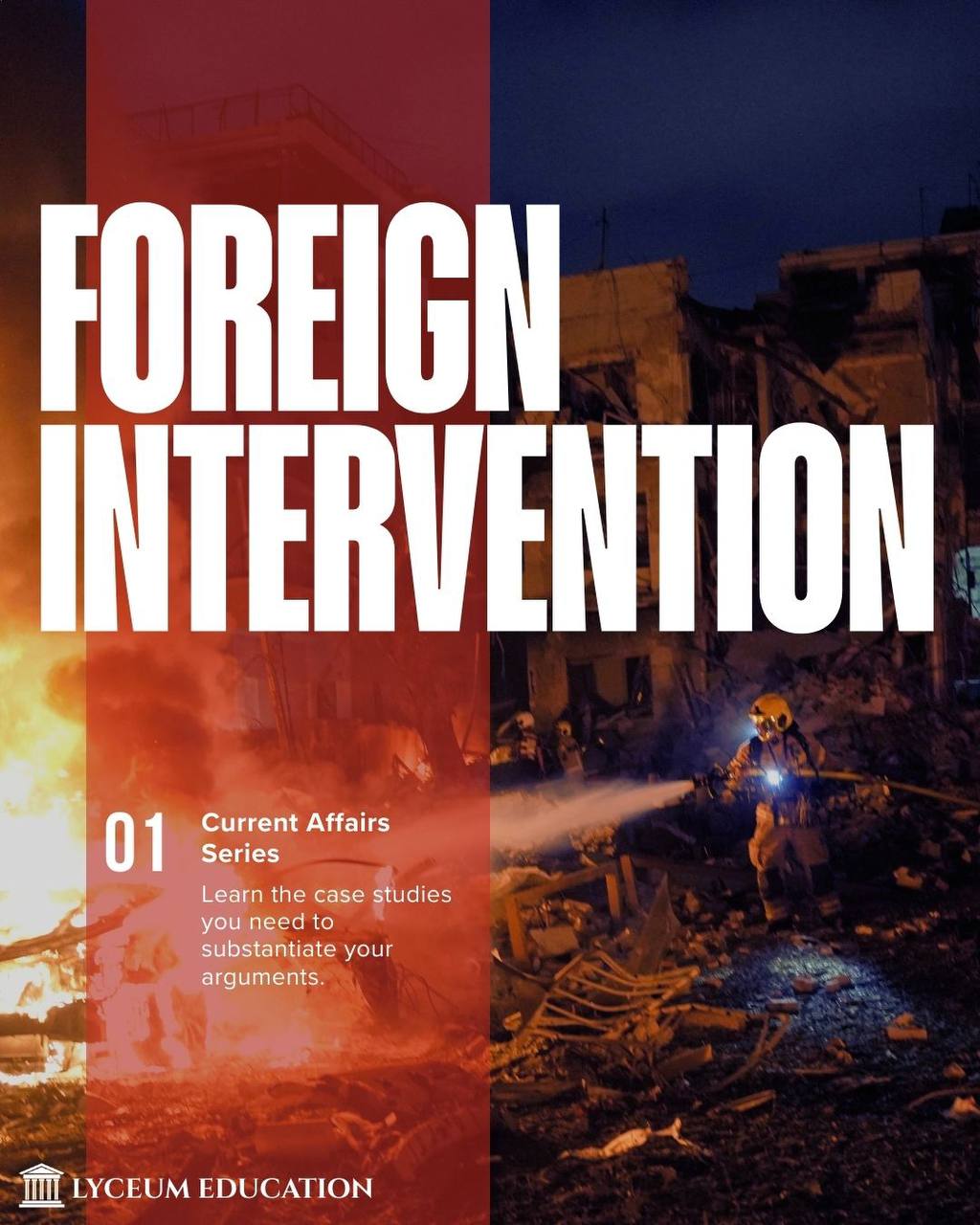
The war involving the United States, Israel, and Iran has intensified following the killing of Iran’s Supreme Leader, Ali Khamenei, with US President Donald Trump asserting that the United States should have a role in deciding Iran’s next leader. Trump rejected the prospect of Khamenei’s son, Mojtaba Khamenei, succeeding his father, calling him unfit and insisting that Iran needs leadership capable of restoring stability. Meanwhile, US and Israeli forces have continued large-scale strikes on Iranian military targets and infrastructure. In response, Iran has retaliated with drone and missile attacks across the region, hitting Israel and several Gulf states. The conflict has rapidly expanded beyond Iran, drawing in neighbouring countries and disrupting global energy supplies, driving up oil prices and threatening broader regional instability.
Application
The suggestion by Donald Trump that the United States should have a role in selecting Iran’s next leader raises serious concerns about the principle of sovereignty. In international relations, sovereignty refers to a state’s supreme authority to govern its own territory and political system without interference from external powers. This principle means that each country has the right to determine its own government and leadership through its own institutions and people. When an external power attempts to influence or dictate who should lead another nation, it undermines that nation’s independence and the equal standing of states in the international system. Ultimately, the legitimacy of political authority must come from the people and institutions within the country itself, not from foreign governments pursuing their own strategic interests. If the United States truly seeks to present itself as a defender of democracy, it MUST respect the right of other nations to choose their own leaders rather than imposing its will upon them.