

Labour Dehumanised
Summary
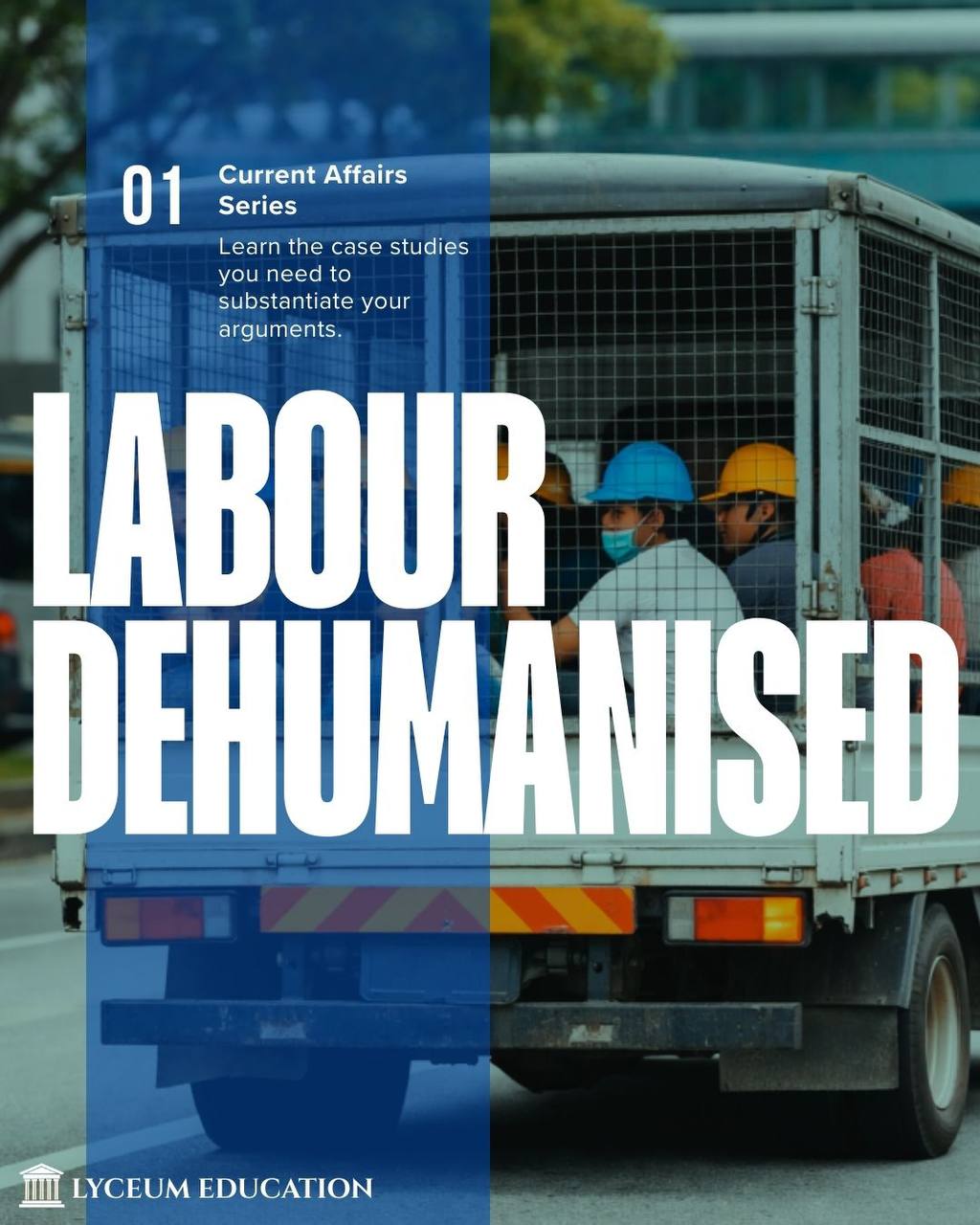
Singapore will ban the use of caged lorries to transport migrant workers from 2027, a move announced by Sun Xueling that has been welcomed as a positive step toward improving worker safety. Migrant worker advocacy groups such as Humanitarian Organization for Migration Economics and Transient Workers Count Too argue that the reform does not go far enough, noting that caged lorries represent only a small portion of the roughly 50,000 lorries used to transport workers and that travelling in the back of any goods vehicle remains unsafe. These groups call for a long-term shift toward transporting workers in buses or vehicles with proper seating and safety measures. However, construction firms contend that banning all lorry transport would be costly and impractical due to labour shortages, congestion, and logistical challenges.
Application
In a system where decisions are governed primarily by calculations of cost and profit, the rights and welfare of workers are often pushed aside as inconvenient expenses. Measures that ensure safety and dignity, such as proper transport or humane working conditions, are sometimes treated by firms as unnecessary costs that reduce margins rather than as moral obligations. While these arrangements may appear consensual on the surface, many migrant workers accept them not out of genuine choice but out of necessity, compelled by economic pressures and limited opportunities in their home countries. It is therefore encouraging to see progressive steps taken to improve their conditions. Yet meaningful change will only emerge when society stops viewing human beings as variables in an economic equation and begins to recognise them as individuals whose dignity and safety must never be negotiable.