

An Out of Reach Cure
Summary
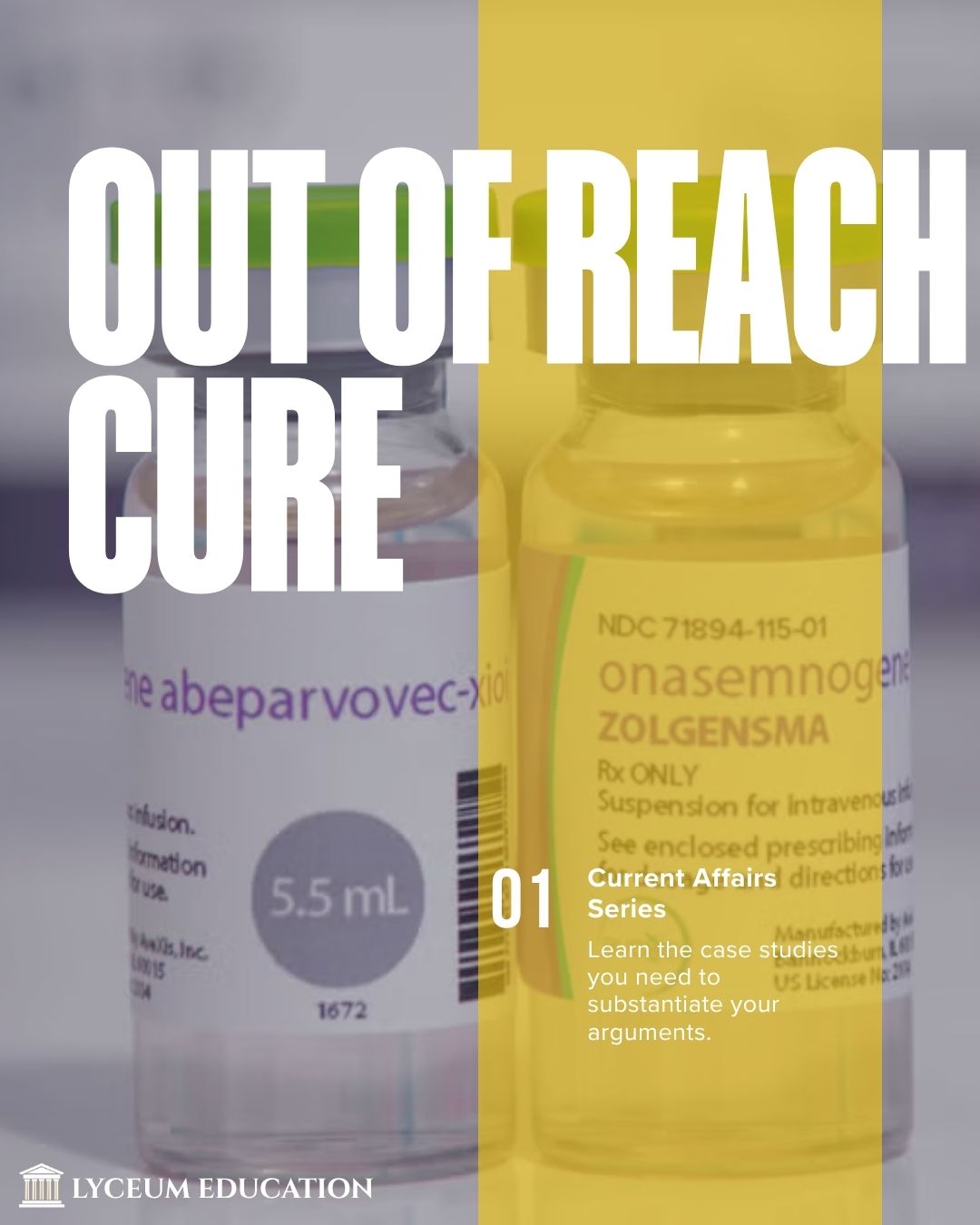
Baby Ginny's and Baby Faziq's family are racing against time to raise S$2.4 million for a single dose of a life-saving gene therapy. Their children suffer from Spinal Muscular Atrophy (SMA), a rare genetic disease that progressively weakens muscles and can lead to early death. While a cure in the form of gene therapy exists, it remains financially inaccessible to most. It raises an uncomfortable question: who decides whether a life is worth the cost? Medicine in today's world is so advanced that previously incurable diseases can now be treated. However, these breakthroughs often come with staggering costs 📈 and not everyone can afford what science can now offer.
Application
MOH’s decision reflects a difficult but necessary role of the state: to care for individuals while managing limited resources for everyone. By subsidising Risdiplam but not Zolgensma, the government is prioritising treatments that deliver broader impact at a lower cost, rather than spending a large sum on a single patient. What is economically sensible may NOT always feel morally right. For families facing rare, life-threatening conditions, the idea that a life-saving cure is deemed “not cost-effective” can feel deeply unfair. Yet from the state’s perspective, funding such treatments widely could strain the system and reduce support for many others. Ultimately, sustainable healthcare is about balance. The state must be prudent and forward-looking, but also compassionate. The real challenge lies in finding ways to support such patients without compromising the system as a whole, so that progress in medicine does not become a privilege only a few can access.