

Spending in Chongqing
Summary
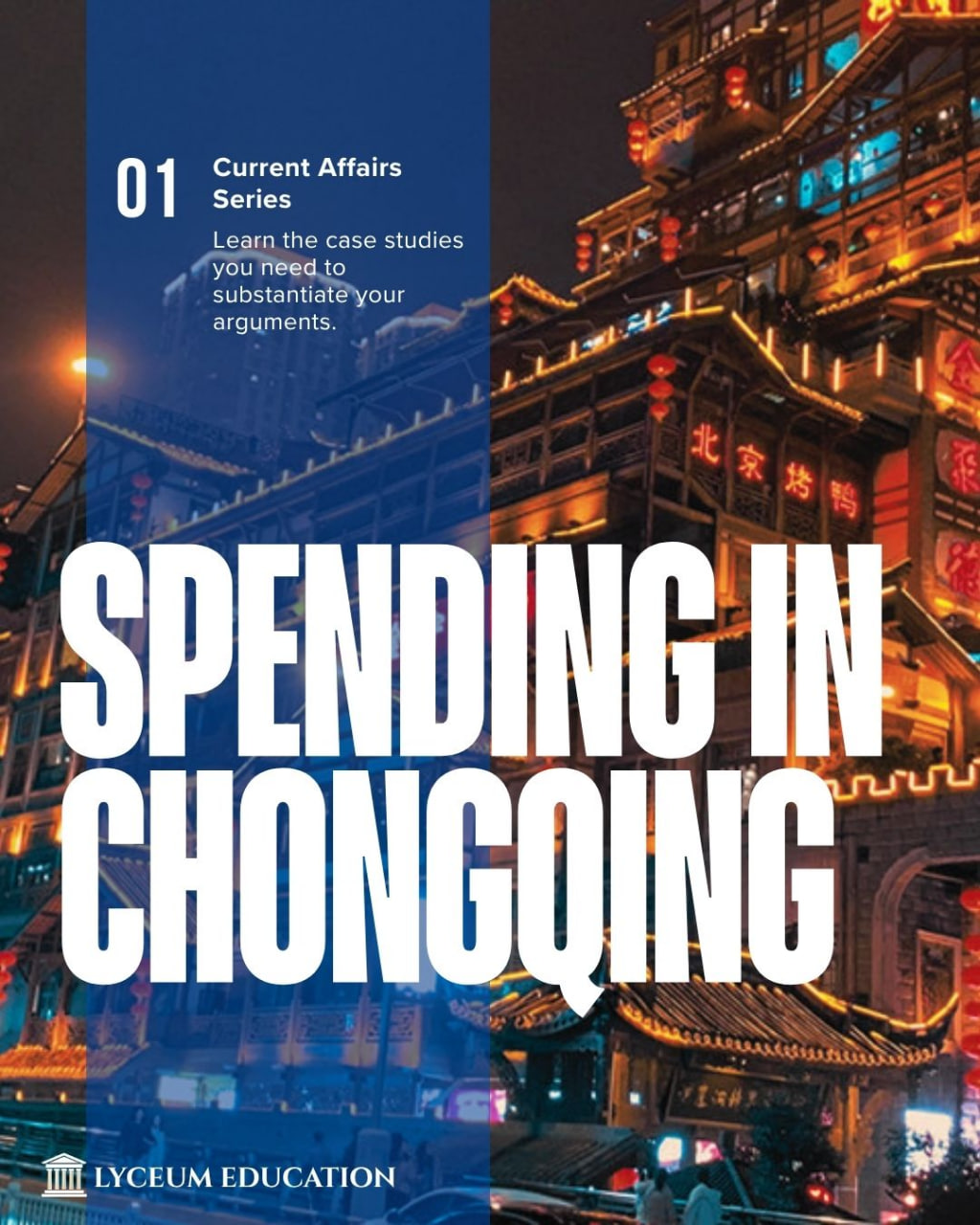
Chongqing has overtaken Shanghai as China’s top city for consumer spending, with retail sales reaching 1.67 trillion yuan in 2025, slightly surpassing Shanghai’s 1.66 trillion yuan. This growth has been driven largely by tourism, including visitors from Southeast Asia such as Singapore, who were drawn to the city after seeing viral social media content of its mala hotpot, steep terrain, and distinctive cityscape. Chongqing offers a wide range of experiences, from riverside walks and scenic attractions like Hongyadong to a vibrant nightlife, keeping visitors engaged and spending throughout their trip. The government has also actively encouraged spending through initiatives such as food-themed movie screenings paired with tastings, sporting events, and the development of what it calls the “debut economy”, where new products and concepts are launched to generate buzz. Along with policies like visa-free travel, these efforts have helped boost consumption. However, experts caution that while tourism has driven short-term growth, long-term sustainability will still depend on income levels and whether spending can be maintained.
Application
Chongqing’s rise reflects what Joseph Pine and James Gilmore describe as the experience economy, where value comes not just from goods or services, but from experiences. People are no longer simply paying for what they consume, but for how those moments make them feel. This is seen in Chongqing. Tourists are not just buying food or products, they are paying for the experience of eating authentic hotpot, exploring a visually striking city, and enjoying its nightlife. Because the value lies in the experience. More broadly, this shows how consumer behaviour has shifted. Experiences are emotional and shareable, especially in a social media-driven world. As Pine and Gilmore argue, experiences create deeper and more lasting value than goods alone. This allows cities like Chongqing to grow quickly by offering something unique, though such growth can be fragile as it depends heavily on trends and attention.