

Trump's Slight
Summary
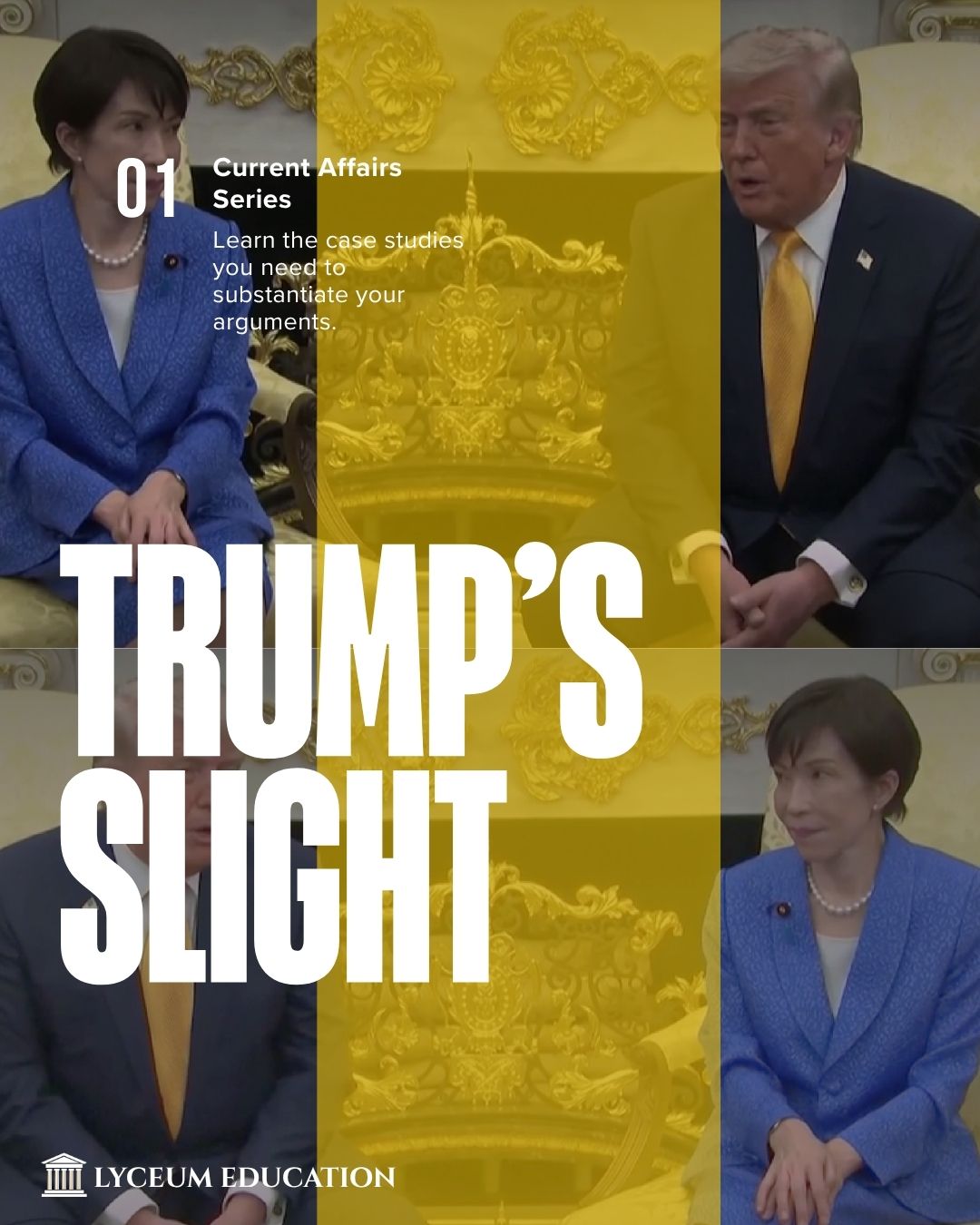
During a meeting between US President Donald Trump and Japanese Prime Minister Sanae Takaichi, a remark referencing the 1941 Pearl Harbor attack introduced a moment of visible tension. Responding to a question about US military actions, Trump drew a comparison to Japan’s surprise attack, prompting an immediate reaction from Takaichi, who appeared taken aback. Observers in the room noted her discomfort, as the reference touched on a deeply sensitive episode in the shared history between the two countries. While the US and Japan have long maintained a close alliance built on reconciliation, such historical references are typically handled with caution, making the exchange stand out within an otherwise diplomatic engagement.
Application
This case highlights the importance of political dialogue and speech being sensitive to context and emotion. Diplomatic relationships are not built on facts alone, but on mutual respect and an understanding of historical wounds. By invoking Pearl Harbor casually, Trump overlooked the emotional weight such references carry for Japan, risking discomfort and potential strain in relations. Effective diplomacy requires leaders to communicate with awareness of their counterparts’ perspectives, especially when dealing with painful histories. Without this sensitivity, even a single remark can undermine trust and weaken otherwise strong alliances.