

State Sponsored Discrimination
Summary
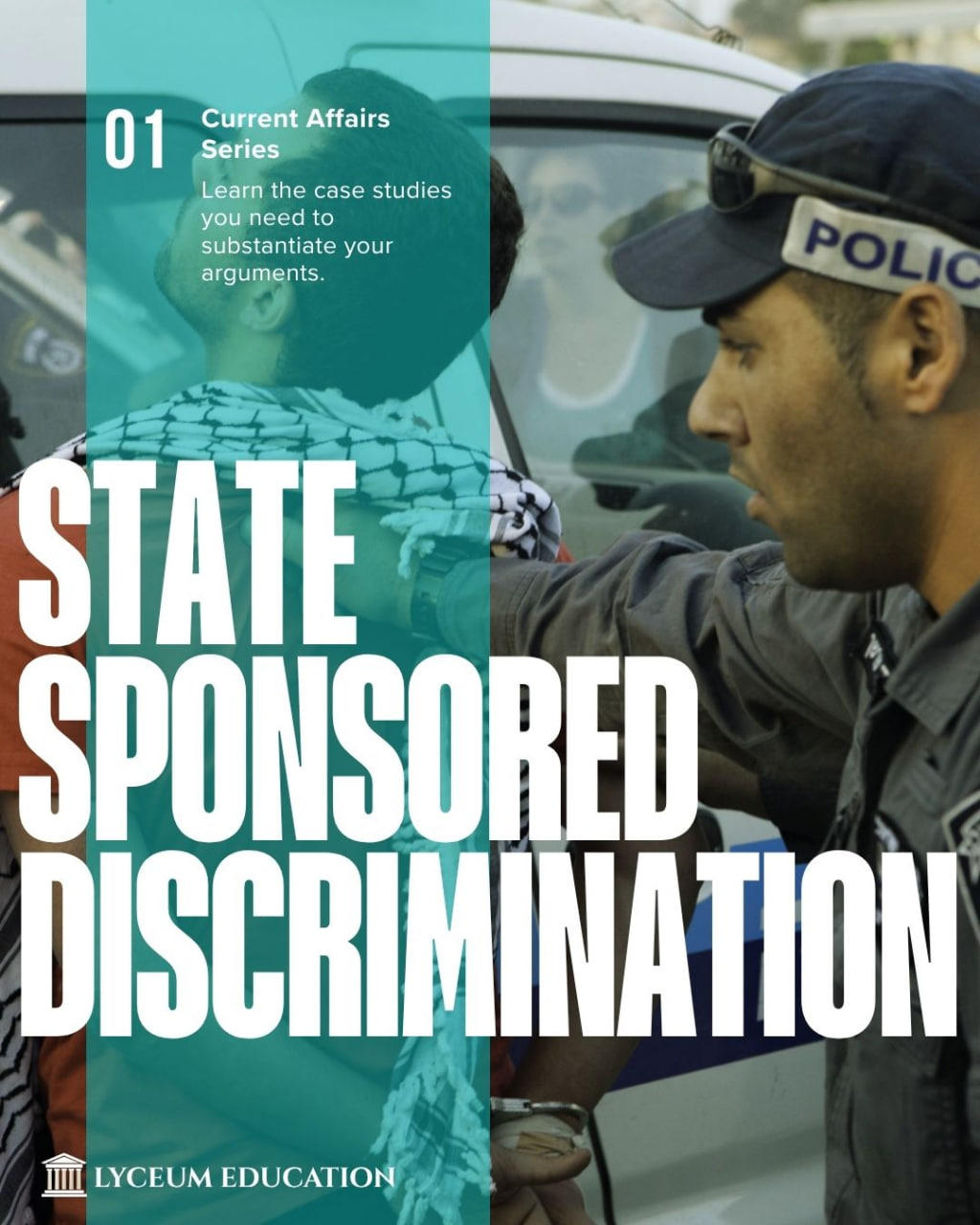
On March 30, 2026, Israel passed the Death Penalty for Terrorists Law by a 62–48 vote, mandating death by hanging for terrorism-related offences, a law widely criticised for applying almost exclusively to Palestinians and requiring executions within 90 days of a final ruling. UN experts and human rights groups argue that the law violates international law, particularly the International Covenant on Civil and Political Rights; it imposes mandatory death sentences, restricts fair trial rights, and allows little room for appeals or commutation. Critics, including the EU, Muslim-majority countries, and organisations like Human Rights Watch, have condemned the law as discriminatory while reinforcing a two-tiered justice system, especially given the 96% conviction rate of Palestinians in military courts, often based on coerced confessions. Domestically, Israel's Association for Civil Rights has challenged the law as unconstitutional. Internationally, concerns have been raised that it undermines democratic principles, although the United States has refrained from condemnation, citing respect for Israel's sovereignty.
Application
This law exemplifies state-sanctioned discrimination because it institutionalises unequal treatment under the legal system, targeting Palestinians specifically rather than applying uniformly to all individuals. Laws are generally expected to uphold the principle of equality before the law, ensuring that justice is impartial and consistent regardless of identity. However, by design, this legislation creates a separate and harsher standard of punishment for Palestinians, undermining the very foundation of legal fairness. If implemented and enforced, such a policy is likely to deepen resentment and mistrust, further entrenching divisions between Israelis and Palestinians. Instead of serving as a tool for justice or deterrence, it risks escalating tensions and making any prospects of reconciliation or long-term peace even more remote.